Hearing that your cat has kidney disease changes the way you look at every bag and can of food on the shelf. Suddenly the best cat food for kidney disease is not a casual choice, it is one of the most important parts of your cat’s treatment plan. A well chosen kidney diet can slow the disease, ease symptoms like nausea and dehydration, and help your cat hold onto weight and appetite for longer. In this guide we walk through exactly what vets look for in a kidney diet, the prescription foods they reach for first, and the lower phosphorus non-prescription options worth knowing about.
A quick note before we start: kidney disease is a medical condition, and food is only one part of managing it. Always work with your own vet to pick the right diet for your cat’s stage of disease, bloodwork, and appetite. Think of this guide as preparation for that conversation, not a substitute for it.
What Vets Look for in a Kidney-Friendly Cat Diet
When a vet recommends a diet for chronic kidney disease (CKD), they are not just picking a “senior” label off the shelf. They are looking for a specific nutrient profile. Here is what matters most, in the order most vets weigh it.
Low phosphorus
Phosphorus restriction is the single most important dietary change for cats with kidney disease. Failing kidneys cannot clear phosphorus from the blood, and high levels speed up further kidney damage. Renal diets cut phosphorus well below regular maintenance foods. If you compare labels, look for the lowest phosphorus you can find, ideally under the levels recommended by your vet for your cat’s stage.
Controlled, high quality protein
This one surprises people. Vets do not starve cats of protein, because cats are obligate carnivores and too little protein wastes their muscles. Instead, kidney diets use moderate amounts of highly digestible, high quality protein, so the cat gets the amino acids it needs while producing less nitrogen waste for the kidneys to filter.
High moisture
Cats with kidney disease urinate more and dehydrate easily. Wet food with 75 to 80 percent moisture helps them take in more water with every meal, which is why vets almost always prefer canned or pouched renal diets over dry. Our roundup of our favorite wet cat foods explains why moisture matters for cats generally, and it matters even more here.
Omega 3 fatty acids
EPA and DHA from fish oil help calm the inflammation inside damaged kidneys. Most prescription renal diets add them at therapeutic levels, so you do not need a separate supplement unless your vet suggests one.
Controlled sodium
Sodium levels in kidney diets are moderated to support healthy blood pressure without making the food taste bland. Too much sodium can worsen hypertension, which is common in kidney patients.
Palatability
The most perfect nutrient profile means nothing if your cat refuses to eat. Cats with kidney disease often feel nauseous and lose appetite, so vets weigh taste, smell, and texture heavily. A food your cat will actually eat consistently beats the ideal food they sniff and walk away from.
The Prescription Leaders: Foods Vets Recommend First
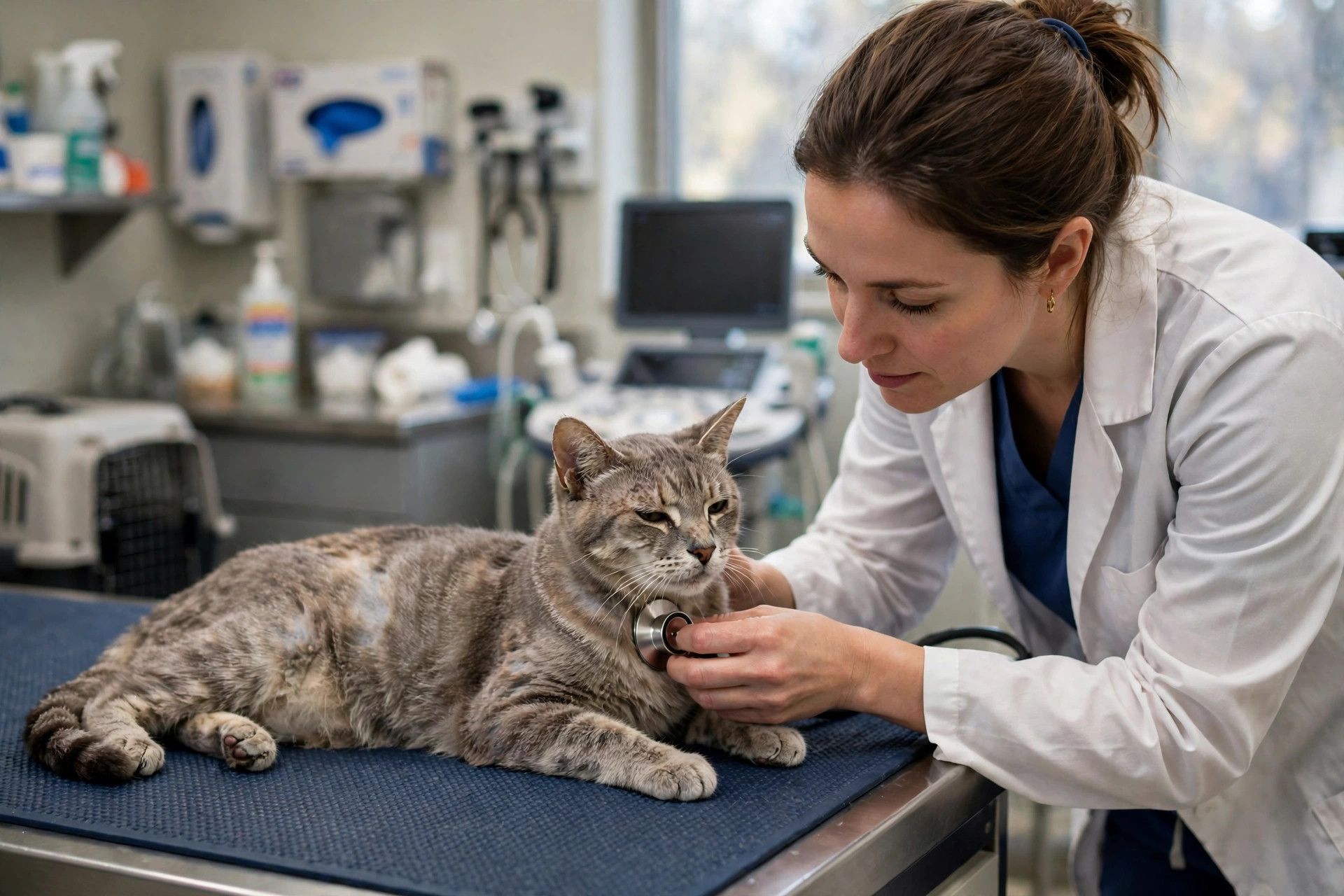
For diagnosed kidney disease, prescription renal diets remain the gold standard. They are the only foods clinically tested to extend survival in cats with CKD, and they come in several textures so picky eaters usually find one they accept. You need veterinary authorization to buy them, which is one more reason to keep your vet in the loop.
Hill’s Prescription Diet k/d
Hill’s k/d is the most researched renal diet in veterinary medicine, with published studies showing it extends quality life in cats with kidney disease. It is low in phosphorus, includes added omega 3s and antioxidants, and comes in dry, canned, and stew textures. The ActivBiome+ Kidney Defense formula adds prebiotic fiber to support the gut kidney axis. If your vet names one food first, this is very often the one.
Royal Canin Renal Support
Royal Canin’s renal line is built around palatability. It comes in three aromatic profiles, savory, tasty, and flavorful, because the company found that cats with reduced appetite respond to scent variety. The nutrient profile hits the classic targets: restricted phosphorus, adapted protein, added EPA and DHA, and an antioxidant complex. Vets often turn to this line when a cat rejects other renal foods.
Purina Pro Plan Veterinary Diet NF
NF stands for Kidney Function, and this diet restricts phosphorus while keeping protein at moderate, high quality levels. It includes added B vitamins, which kidney cats lose in their dilute urine, plus omega 3s and antioxidants. It comes in wet and dry forms and is often a strong value option among the prescription choices.
Because these foods require a prescription, the transition deserves some care. Our guide on how to switch your cat to prescription food covers the slow 7 to 14 day changeover that avoids stomach upset and food refusal.
Lower Phosphorus Non-Prescription Options Worth Knowing
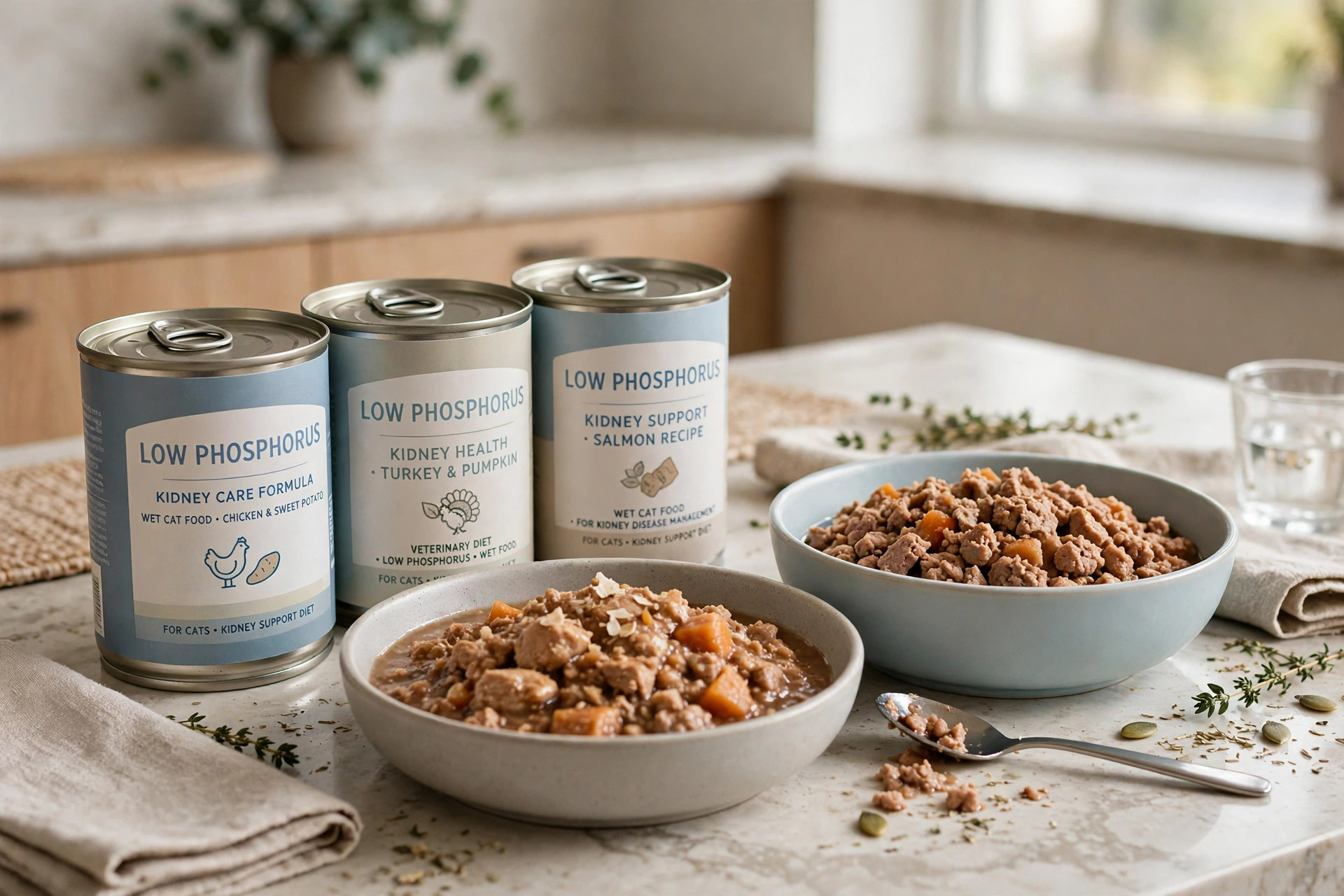
Not every cat lands on a prescription diet right away. Some cats refuse every renal formula, and some owners want an option for the earliest stages under vet supervision. These non-prescription foods are not clinically equivalent to prescription renal diets, but they sit meaningfully lower in phosphorus than typical cat foods. Ask your vet whether any of them fit your cat’s numbers.
Weruva Truluxe
Weruva’s Truluxe line features very low phosphorus for a non-prescription food, along with high moisture and real meat and fish recipes. Many kidney cats like the shredded and pate textures. It is a frequent recommendation in kidney cat communities precisely because picky cats accept it, though your vet should confirm the phosphorus level suits your cat’s stage.
Dave’s Pet Food Restricted Phosphorus
Dave’s makes one of the few widely available non-prescription canned foods formulated specifically around phosphorus restriction. It is simple, affordable, and designed for cats whose vets want lower phosphorus without a prescription formula. Palatability is decent rather than outstanding, so warming it (more on that below) helps.
Forza10 Renal Actiwet
Forza10’s Renal Actiwet is a therapeutic style wet food made with lower phosphorus and added ingredients aimed at kidney support. It sits in the middle ground between standard and prescription foods and comes in single serve trays that work well for cats who want fresh food at every meal.
Fussie Cat
Fussie Cat is not marketed as a renal food, but several of its recipes are naturally lower in phosphorus than average canned foods, and cats famously like the taste. For a cat that rejects every therapeutic diet, a Fussie Cat recipe your vet approves can be a practical bridge, because eating something is always better than eating nothing.
Quick Comparison: Kidney-Friendly Cat Foods
| Food | Type | Phosphorus level | Textures | Best for |
|---|---|---|---|---|
| Hill’s Prescription Diet k/d | Prescription | Low, clinically restricted | Dry, canned, stew | Cats at any diagnosed stage |
| Royal Canin Renal Support | Prescription | Low, clinically restricted | Dry, three wet aromas | Picky eaters who reject other renal foods |
| Purina Pro Plan NF | Prescription | Low, clinically restricted | Dry, canned | Value conscious prescription feeding |
| Weruva Truluxe | Non-prescription | Low for non-prescription | Pate, shredded | Cats refusing prescription diets |
| Dave’s Restricted Phosphorus | Non-prescription | Restricted | Canned | Affordable lower phosphorus feeding |
| Forza10 Renal Actiwet | Non-prescription | Low | Single serve trays | Fresh at every meal feeding |
| Fussie Cat | Non-prescription | Lower than average | Canned varieties | A palatable bridge when nothing else is eaten |
Early Stage vs Late Stage Feeding
Kidney disease is staged from 1 to 4 by the International Renal Interest Society, and feeding shifts as the stage advances.
In early stages (1 and 2), many cats still feel well and eat normally. Some vets introduce a renal diet right away to slow progression, while others monitor and switch when bloodwork or appetite changes. Lower phosphorus non-prescription foods sometimes play a role here, with your vet’s approval, alongside fresh water and regular checkups.
In later stages (3 and 4), appetite usually drops and nausea rises. This is where prescription renal diets prove their worth, and where feeding strategy matters as much as the food itself. Calories become the priority: a cat that eats a slightly less ideal food is doing better than a cat eating nothing. Many kidney patients are also seniors, so our senior cat food buying guide is a useful companion read for the other age related nutrition issues these cats face.
How to Get a Cat With Kidney Disease to Eat
Kidney cats are notorious for turning up their noses, and the stress of a refused meal wears on everyone. These vet approved tricks genuinely help.
Warm the food slightly. Ten seconds in the microwave or a splash of warm water brings out the aroma. Cats eat with their noses first, and kidney cats with nausea need every bit of encouragement. Serve at about mouse body temperature, never hot.
Offer small meals often. Four to six small meals beat two big bowls. A full bowl can overwhelm a nauseous cat, while a tablespoon sized portion feels manageable and keeps calories coming through the day.
Try toppers and texture swaps. A spoonful of tuna water (low sodium), a crumbled freeze dried treat, or a different texture from the same brand can restart interest. Rotating between pate and shredded versions of an accepted food prevents flavor fatigue.
Keep the bowl routine calm. Feed in a quiet spot away from noise and other pets, and wash bowls daily. Kidney cats can develop aversions fast, so a bad experience at the bowl can set you back days.
Ask about appetite support. If your cat consistently eats less than three quarters of their normal amount, call your vet before trying anything drastic. Appetite stimulants and anti nausea medication exist specifically for this situation.
When to Call the Vet
Food supports treatment, but it does not replace monitoring. Call your vet promptly if you notice any of these: your cat stops eating for more than 24 hours, vomits repeatedly, drinks suddenly much more or much less, loses weight quickly, becomes lethargic or hides, or has mouth ulcers or very bad breath (a sign of uremic toxins). Kidney disease management works best when diet, medication, and bloodwork move together, so keep those recheck appointments even when your cat seems fine.
One more distinction worth knowing: kidney disease and urinary problems are different conditions with different dietary needs. If your cat also has urinary issues, read our guide to cat food for urinary health as a related read, and ask your vet which condition should drive the food choice.
Frequently Asked Questions
Can a cat with kidney disease eat regular cat food?
Regular cat foods are usually much higher in phosphorus and protein than a kidney cat should have, so a renal diet is the better long term choice. That said, a cat that refuses all renal food still needs calories. Work with your vet on an approved lower phosphorus alternative rather than leaving the bowl untouched.
Is wet food or dry food better for cats with kidney disease?
Wet food is better for nearly every kidney cat. The extra moisture helps offset the fluid loss from dilute urine and supports hydration, which failing kidneys struggle to maintain. If your cat only accepts dry food, ask your vet about adding water fountains, broth, or subcutaneous fluids rather than forcing a switch.
Do I need a prescription to buy kidney friendly cat food?
True prescription renal diets like Hill’s k/d, Royal Canin Renal Support, and Purina Pro Plan NF require veterinary authorization. Non-prescription foods with lower phosphorus do not need a prescription, but they are not clinically equivalent, so check with your vet before using one for a diagnosed cat.
How do I transition my cat to a kidney diet?
Go slowly, over 7 to 14 days, mixing increasing amounts of the new food into the old. Kidney cats are prone to nausea and food aversions, so rushing the change can create a refusal that lasts weeks. Warm the new food, offer it fresh, and never let a cat go more than a day without eating during the switch.
Can a kidney diet reverse kidney disease in cats?
No diet can reverse chronic kidney disease, because damaged kidney tissue does not regenerate. What the right food does is slow the progression, reduce the waste buildup that causes nausea and poor appetite, and keep your cat feeling well for longer. That makes diet one of the most powerful tools you have, even though it is not a cure.
Choosing the best cat food for kidney disease is really about matching the right nutrient profile to your cat’s stage and appetite, then sticking with it. Start with your vet’s recommendation, give the transition time, and use the feeding tricks above to keep meals appealing. Your cat cannot tell you what helps, but steadier energy, better appetite, and stable bloodwork will tell the story for them.