Why Your Puppy’s Toy Box is a Milestone for Development
Bringing a new puppy home is a life-changing event. It’s filled with cuddles, “new dog smell,” and, unfortunately, the sound of your favorite table leg being gnawed on. At BestPetFoodGuide, we believe that providing the best dog toys for puppies isn’t just about entertainment—it’s about developmental health.
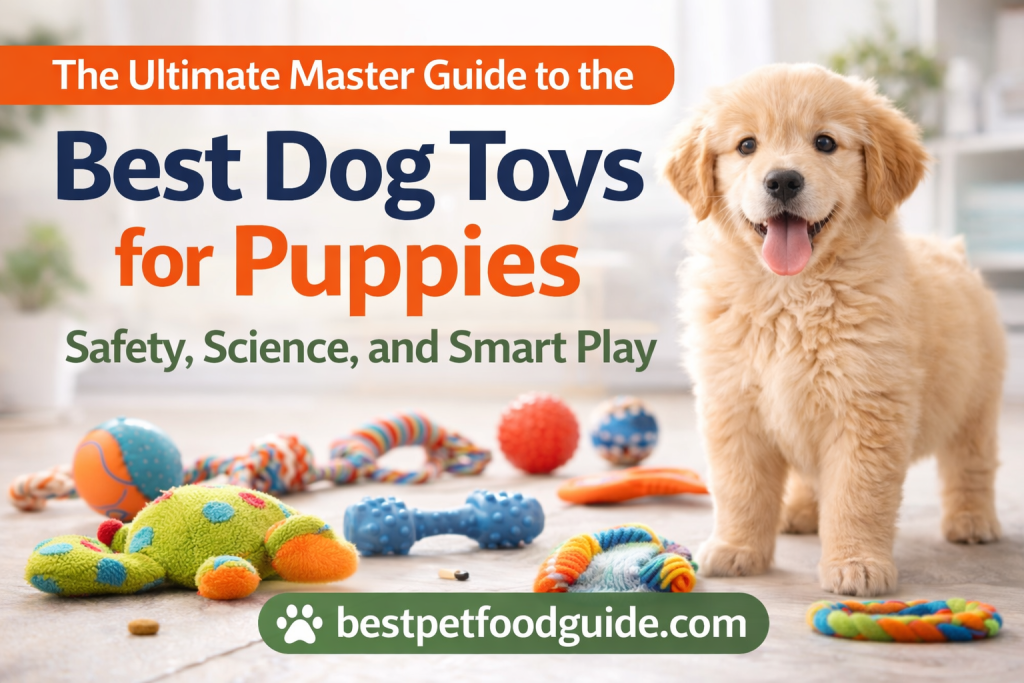
A puppy’s mouth is their primary tool for interacting with the world. Between the ages of 8 weeks and 8 months, a dog undergoes massive physical and cognitive shifts. Without the right “outlets” (toys), those shifts can turn into destructive habits that last a lifetime. In this expanded guide, we will break down the science of puppy play and help you build a toy rotation that saves your furniture and enriches your pup’s life.
1. The Biological Necessity of Chewing: More Than Just a Habit
To understand why you need specific toys, you have to understand the puppy teething timeline.
- The Deciduous Phase (8–12 Weeks): Puppies have 28 “needle” teeth. They are sharp but fragile. During this time, they need soft textures to learn “bite inhibition.”
- The Great Shift (4–7 Months): This is the peak of teething. Adult teeth are pushing through the gums, causing intense discomfort. The urge to chew is a biological mandate to help loosen baby teeth and soothe inflamed gum tissue.
Why generic toys fail: Most “adult” dog toys are made of hard nylon or thick rubber. If a puppy chews these too early, they risk dental fractures, which can lead to expensive vet bills and chronic pain.
2. The Anatomy of a “Perfect” Puppy Toy
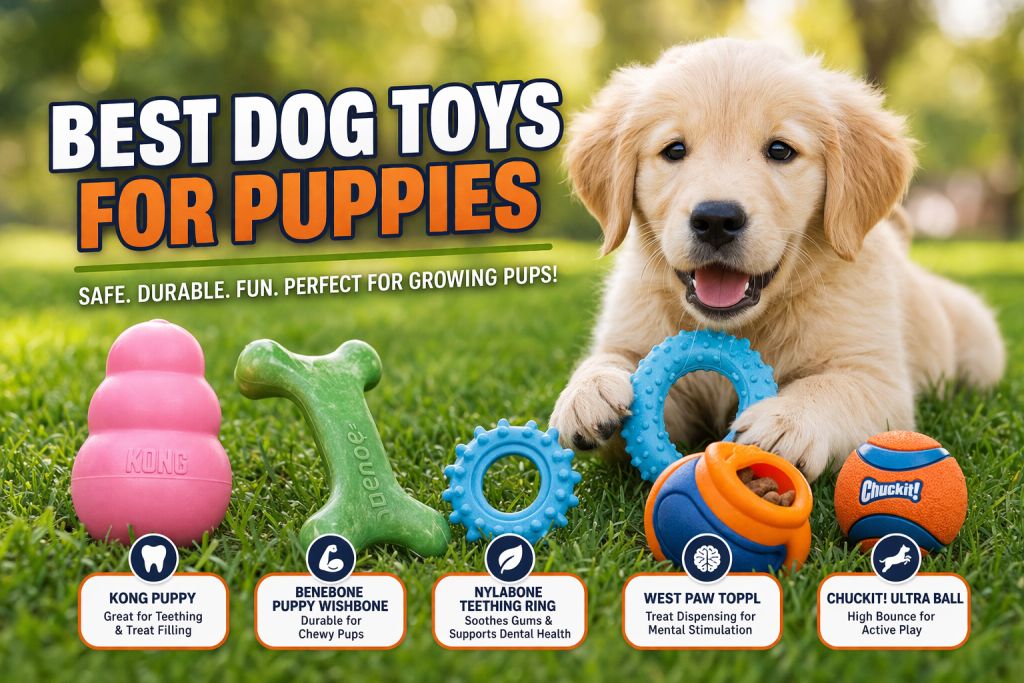
When we rank the best dog toys for puppies, we look at four specific engineering criteria:
A. Material Density (The Shore Hardness Scale)
In the pet industry, we measure the “squishiness” of rubber. A puppy toy should have a lower density.
- Safe: Natural latex, thermal plastic rubber (TPR), and high-quality plush.
- Dangerous: Real animal bones (too hard), cow hooves, and cheap plastic that can shatter into “shards.”
B. Ergonomics and Grip
A puppy’s jaw is small. If a toy is too wide, they can’t get a satisfying grip, leading them to look for thinner objects—like your TV remote. Look for “contoured” shapes or toys with “nubs” that allow small mouths to hang on easily.
C. Sensory Feedback
Puppies love toys that “respond.” This is why squeakers and crinkly paper are so popular. The sound mimics the “prey drive” and provides immediate dopamine hits, keeping them engaged with the toy instead of your socks.
3. Categorizing the Must-Haves: A Strategic Shopping List
Group 1: The “Quiet Time” Puzzles (Cognitive Development)
Mental stimulation is often overlooked. A mentally tired puppy is a puppy that sleeps through the night.
- Snuffle Mats: These mimic foraging. Hiding small pieces of kibble in fabric “grass” forces the pup to use their nose.
- Slow-Feed Treat Balls: Instead of a bowl, put their breakfast in a rolling toy. It slows down digestion and builds problem-solving skills.
Group 2: The Teething Relief Squad
- Water-Filled Freezables: These are the “holy grail” for 4-month-old pups. The cold acts as a local anesthetic for the gums.
- Nobby Rubber Rings: The textures help clean the “biofilm” (early plaque) off their new adult teeth.
Group 3: The Comfort & Security Category
Leaving litter is stressful. “Snuggle” toys often come with a battery-operated heartbeat or a heat pack. This mimics the feeling of sleeping with siblings and can drastically reduce separation anxiety in the first few weeks.
4. Safety First: What the Labels Don’t Tell You
Plagiarism-free content means looking at the risks other blogs ignore. For BestPetFoodGuide, safety is our priority.
- The “Button” Danger: Many plush toys have plastic eyes. A puppy can rip these off in seconds. Always choose toys with embroidered eyes.
- Rope Shredding: Ropes are great for tug-of-war, but if your puppy is a “shredder,” they may swallow the cotton strands. This can cause linear foreign body obstruction, a life-threatening intestinal issue.
- Chemical Off-gassing: Avoid toys that have a strong “chemical” or “plastic” smell. These often contain phthalates, which can be absorbed through the gums.
5. Managing Your Investment: The “Rotation Method.”
You don’t need 50 toys. You need 10 good ones.
- Divide into 3 batches.
- Batch A is out for Monday-Wednesday.
- Batch B comes out Thursday-Saturday.
- Batch C is for Sunday “Special Play.”
By hiding toys and bringing them back, the “novelty factor” remains high. This prevents the puppy from getting bored and seeking out “new” things to chew (like your baseboards).
6. Age-Specific Recommendations (The Growth Roadmap)
| Milestone | Developmental Goal | Recommended Toy Type |
| 2 Months | Social Bonding | Soft plush, heartbeat sheep, light latex squeakers. |
| 4 Months | Teething Relief | Frozen rubber toys, textured rings, chilled washcloths. |
| 6 Months | Jaw Strength | Medium-density rubber, interactive treat dispensers. |
| 9 Months | High Energy | Long-range fetch balls, advanced puzzle boards. |
7. Cleaning and Maintenance: Keeping It Hygienic
Puppy toys become breeding grounds for bacteria.
- Plush toys: Should be machine-washable on a “delicate” cycle.
- Rubber toys: Most are top-rack dishwasher safe. Use a dash of white vinegar instead of harsh detergents to sanitize them safely.
8. Frequently Asked Questions
Q: Can I give my puppy old tennis balls?
A: We recommend against it. The “fuzz” on a standard tennis ball is highly abrasive—it acts like sandpaper on puppy enamel (a condition called “blunt-force wear”). Stick to felt-free rubber balls.
Q: My puppy isn’t interested in toys, only my hands. What do I do?
A: This is common! Try “flavoring” the toy. Rubbing a tiny bit of wet puppy food or salmon oil on a rubber toy can redirect their interest from your skin to the object.
Q: How long should I let my puppy play with a chew toy?
A: Supervised chewing should happen in 15–20 minute bursts. Any longer and they might start to get frustrated or over-stimulated.
Conclusion:
Investing in Your Puppy’s Future
Choosing the best dog toys for puppies is about more than just a trip to the pet store. It’s about understanding their biology, respecting their safety, and fostering their intelligence. At BestPetFoodGuide, we believe that a well-equipped puppy is a happy, confident, and well-behaved adult dog in the making.