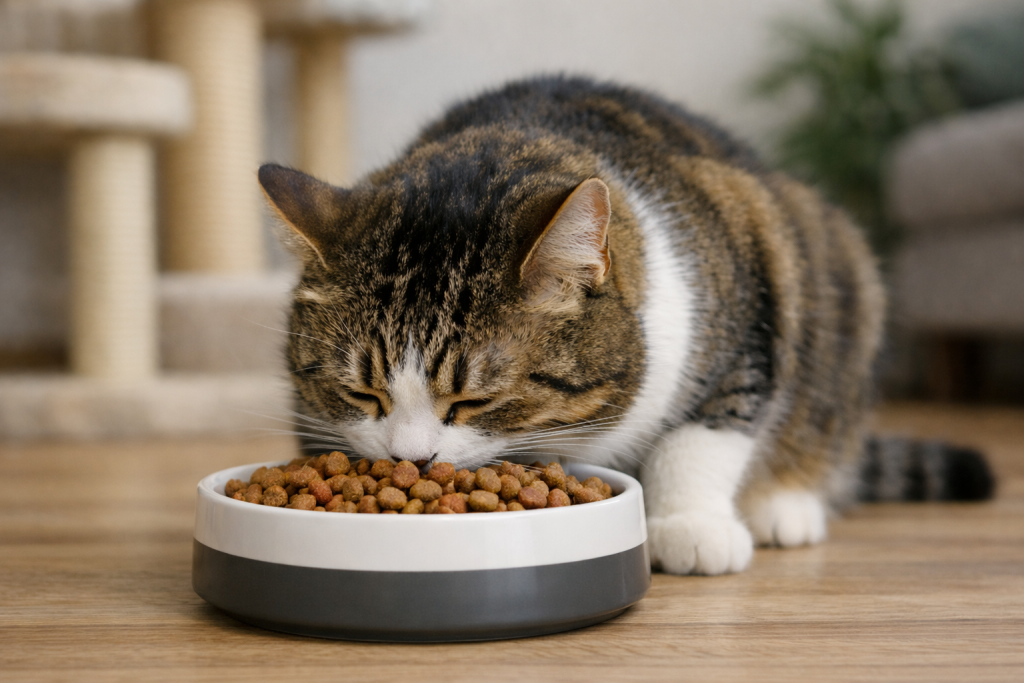
Finding a damp tube of fur on the rug is a rite of passage for cat owners, but here is something most of them never hear: frequent hairballs are not normal. Vets point out that a healthy digestive system moves swallowed hair straight through, so a cat that hacks one up every week is telling you something needs attention. The fix is usually unglamorous: the right fiber in the food bowl, a brush in your hand, and enough water in the diet. The best cat food for hairballs covers the first part, and this guide covers all three.
Full honesty first: nobody ran these foods through a lab or a panel of test cats. These picks come from reading labels for the ingredients that actually move hair through a cat (specific fibers, moisture, coat-supporting fats), cross-checked against what US vets and nutritionists recommend. Every pick below names what it does well and who should skip it, because the right food depends on your cat, not the shelf.
Why Hairballs Happen, and When They Are Not Normal
Cats swallow hair every time they groom; a fastidious cat can ingest a startling amount in a week. Most of it should pass through the digestive tract and leave in the stool. Hairballs form when hair collects in the stomach faster than the gut moves it along, and the cat vomits up a compacted mass instead.
An occasional hairball in a long-haired cat during shedding season is unremarkable. The line into “not normal” is frequency and effort. Call your vet if your cat vomits hairballs more than once or twice a month, retches repeatedly without producing anything, or shows appetite loss, lethargy, constipation or a swollen belly. Those can signal a blockage or an underlying gut problem, and no food fixes that on its own.
What to Look for in a Hairball Control Cat Food
Fiber is the active ingredient in every serious hairball formula, but the type matters. Psyllium husk, beet pulp and powdered cellulose are the fibers you want to see named on the label; they add bulk that keeps the digestive tract moving so hair passes instead of piling up. Vague “fiber” from unnamed sources is a weaker signal.
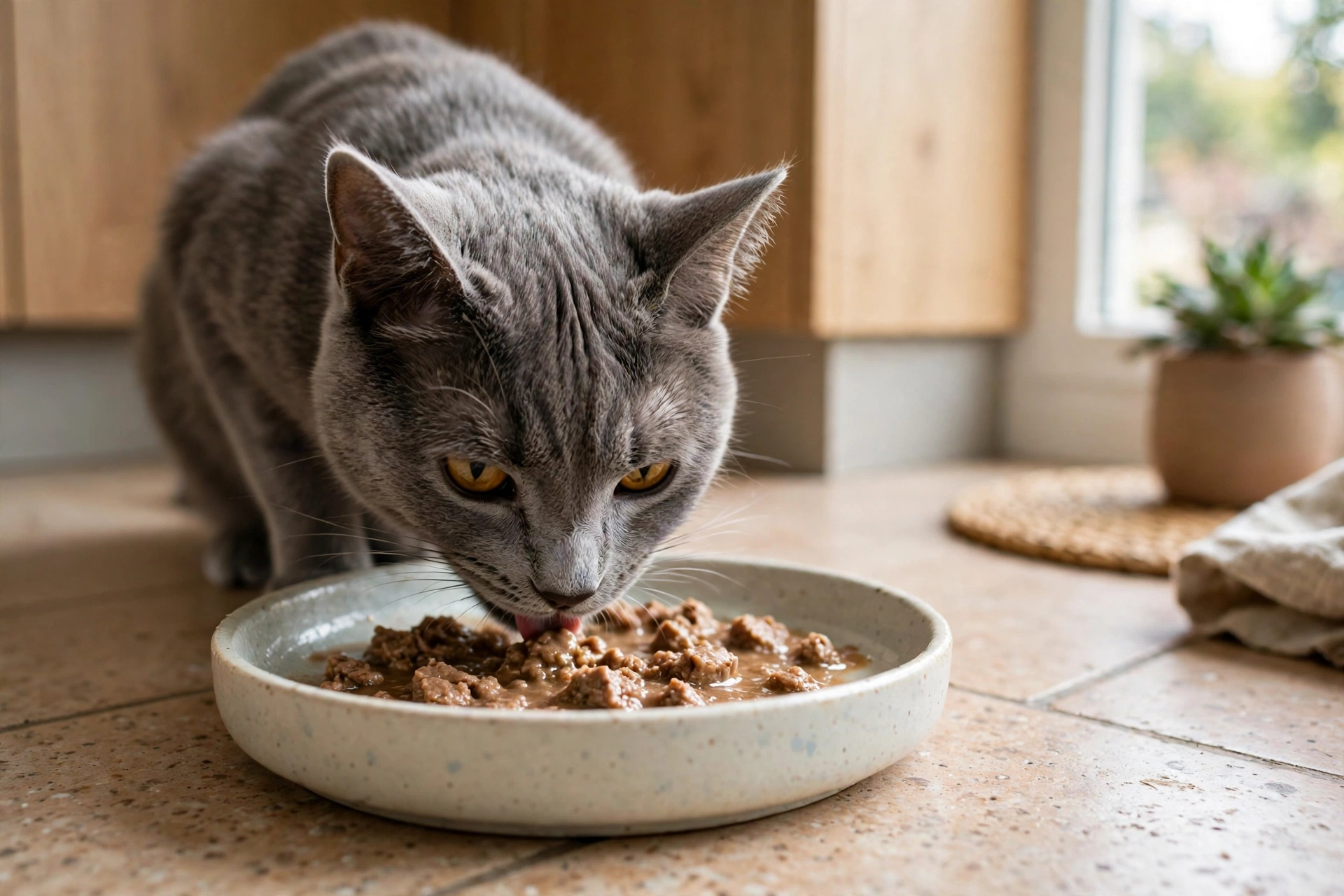
Moisture is the second lever. Wet food is around 75 to 80 percent water, and well-hydrated digestion moves everything along faster, hair included. A dry hairball formula plus more wet food in the rotation beats a dry-only approach for many cats. Third, look for omega-3 and omega-6 fatty acids from named sources like fish oil. A healthier coat sheds less loose hair in the first place, which means less hair swallowed during grooming.
The 7 Best Cat Foods for Hairballs
1. Royal Canin Feline Care Nutrition Hairball Care
Best for: The dedicated hairball formula with the longest track record
Royal Canin built this recipe around a precise fiber blend, including psyllium, aimed at one job: moving swallowed hair through within days rather than letting it compact. It is widely recommended by vets for chronic hairball cats and suits multi-cat households where brushing every cat daily is a fantasy. The price sits above grocery brands.
Skip it if: Your cat needs a limited-ingredient diet; this recipe has a longer ingredient list.
2. Hill’s Science Diet Adult Hairball Control
Best for: A vet-trusted dry food at a moderate price
Hill’s uses natural fiber plus omega fatty acids for skin and coat health, attacking the problem from both ends: less loose hair swallowed, better movement of what is swallowed. It is one of the easiest hairball formulas to find in US stores, and the brand’s feeding trials give it credibility beyond the marketing.
Skip it if: Your cat eats wet food only; Hill’s makes a hairball formula in dry, so pair it with wet food rather than forcing a switch.
3. Iams Proactive Health Adult Hairball Care
Best for: Hairball control on a grocery budget
Iams combines beet pulp fiber with prebiotics for digestive health, with chicken as the lead protein. It is consistently among the most affordable hairball formulas on the shelf, which matters because hairball food is a long-term switch, not a one-bag experiment. A practical pick for multi-cat homes.
Skip it if: Your cat is a texture snob; some picky cats prefer the taste of the premium options.
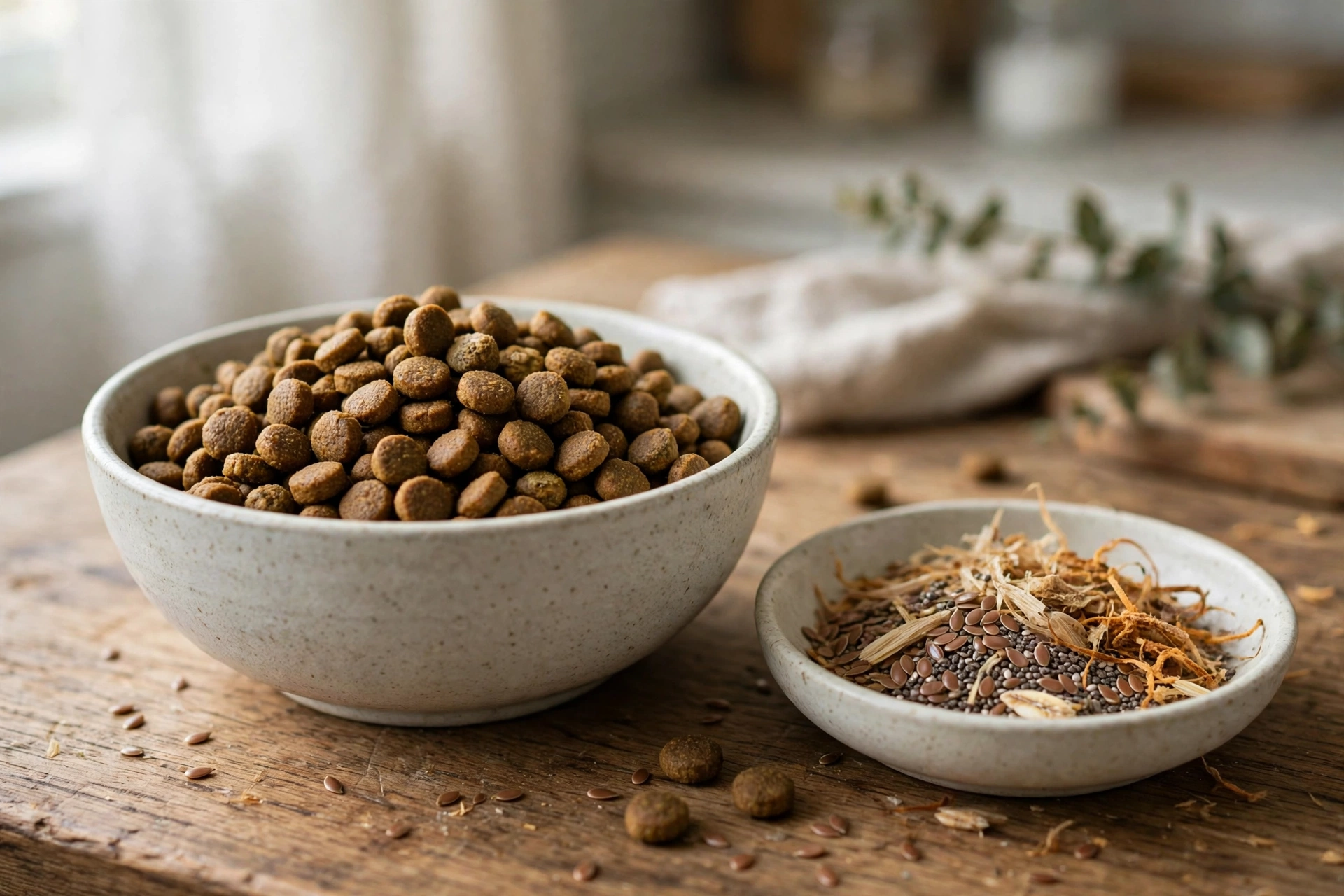
4. Purina ONE Hairball Formula
Best for: The lowest price per day that still does the job
Purina ONE’s hairball recipe uses natural fiber to reduce hairball formation and keeps the ingredient list straightforward for a budget food. It is stocked in nearly every grocery store in the country, so running out is never a crisis. For owners who want to try a hairball formula without committing to premium pricing, this is the entry point.
Skip it if: Your cat has food sensitivities; the recipe includes common allergens like corn and soy.
5. Blue Buffalo Tastefuls Hairball Control
Best for: Owners avoiding corn, wheat and soy
Blue Buffalo’s hairball kibble leads with deboned chicken and uses psyllium seed husks plus cellulose for hair movement, with omega fatty acids for coat health. The recipe skips corn, wheat, soy and artificial flavors, which suits label-conscious owners. It costs more than the grocery picks but less than the vet-channel brands.
Skip it if: Your cat does best on the vet-formulated options above; this is a strong retail formula, not a clinical one.
6. Purina Pro Plan Hairball Management, Wet Food
Best for: Cats that eat wet food only
Dry hairball formulas carry more fiber, but wet-only cats need an answer too. Pro Plan’s wet hairball recipe packs more fiber than typical canned food while delivering the hydration advantage wet food always has. If your cat refuses kibble on principle, this is the most practical hairball food in a can.
Skip it if: Cost per day is the priority; feeding wet food exclusively runs higher than any kibble on this list.
7. Hill’s Science Diet Urinary and Hairball Control
Best for: Cats fighting hairballs and urinary issues at once
Some cats collect problems, and this dual-purpose formula addresses two of the most common: hairballs through natural fiber, and urinary health through controlled minerals and pH. If your vet has flagged both concerns, one food that handles both beats juggling two diets. For background on the urinary side, read our guide to cat food for urinary health.
Skip it if: Your cat’s urinary issues are diagnosed and managed; that cat likely needs a prescription urinary diet, not a maintenance formula.
Grooming: The Half of the Fix Food Cannot Do
Food moves the hair your cat swallows. Brushing removes hair before it is swallowed, and for heavy shedders it matters more than any recipe. Long-haired cats need daily brushing; short-haired cats do well with two or three sessions a week, daily during spring and fall shedding peaks.
Use a slicker brush or a deshedding tool for the undercoat, and a steel comb to check your work; if the comb snags, there is still loose hair to lift. Keep sessions short and end with a treat so the cat connects brushing with good things. A cat that hates the brush was usually introduced too fast; start with thirty seconds and build up.
Water, Wet Food and Hairball Remedies
Hydration keeps the digestive tract moving, and cats are famously bad at drinking enough. A cat fountain encourages drinking in many households, and adding wet food to the rotation raises water intake far more than any bowl strategy. Our comparison of high protein wet vs dry cat food breaks down the moisture math.
Hairball remedy pastes and gels, usually based on petrolatum or mineral oil, lubricate swallowed hair so it passes more easily. They work as a supplement to food and grooming, not a replacement; a dab on the paw a few times a week is the typical routine. Chewable hairball treats with added fiber serve a similar role for cats that refuse paste.
Diet changes take time. Give a new hairball formula four to six weeks before judging it, and transition over seven to ten days to avoid stomach upset. If hairballs continue at the same pace after six weeks of the full routine, that is useful information for your vet, not a failure of the food.
Cats with delicate digestion need a gentler on-ramp; our guide to the best cat food for sensitive stomachs covers stomach-friendly options, and our indoor cat food guide and natural cat food guide round out the feline nutrition shelf.
Frequently Asked Questions
Are hairballs normal for cats?
An occasional hairball, especially in long-haired cats during shedding season, is unremarkable. Weekly hairballs are not normal and deserve a vet visit, since a healthy gut should move swallowed hair through.
Do hairball control cat foods really work?
They help when the formula names its fibers, like psyllium, beet pulp or cellulose, which keep digestion moving so hair passes instead of compacting. They work best alongside regular brushing and take four to six weeks to judge.
How often should I brush my cat to prevent hairballs?
Brush long-haired cats daily and short-haired cats two or three times a week, going daily during spring and fall shedding peaks. Removing loose hair before it is swallowed matters more than any food.
Can I give my cat hairball paste every day?
Most pastes are designed for a few times a week as a supplement to food and grooming, not daily forever. Follow the package directions and treat paste as backup, with fiber in the food and brushing as the main plan.
When should I worry about hairballs?
Worry when hairballs come more than once or twice a month, when your cat retches without producing anything, or when you see appetite loss, lethargy, constipation or a swollen belly. Those signs can mean a blockage and need a vet promptly.