If your dog is carrying extra weight, you are in crowded company. Veterinary surveys in the US have repeatedly found that around half of pet dogs are overweight or obese, and most of their owners do not see it. A little extra padding looks harmless, even cute, but it quietly raises the odds of joint pain, diabetes, breathing trouble and a shorter life. The good news is that weight is one of the few health problems an owner can fix at home, and the best dog food for weight loss is built to make that fix easier.
Here is the honest framing first. No single food melts fat off a dog. Weight comes off when a dog eats fewer calories than it burns, week after week. A good weight-loss food just makes that calorie cut livable: fewer calories per cup, enough protein to protect muscle, and enough fiber that your dog is not staging a hunger strike by day three. The eight picks below are widely available US formulas chosen for exactly those traits, followed by a portion plan you can start today.
Does Your Dog Actually Need to Lose Weight?
Before changing anything, confirm the problem. Vets use a 9-point body condition score, and you can learn the rough version in a minute. Run your hands along your dog’s ribs with light pressure. On a healthy-weight dog you feel the ribs easily under a thin layer of fat, like the back of your hand. If you have to press to find them, your dog is likely overweight. Look from above: there should be a visible waist tucking in behind the ribs. Look from the side: the belly should tuck up, not hang level with the chest.
Breed and build matter. A greyhound will always look leaner than a bulldog at the same score, and fluffy coats hide a multitude of sins. If you are unsure, ask your vet for a body condition score and a target weight at the next visit. That target weight is the number every portion decision below is based on, so it is worth getting right.
What Makes a Dog Food Good for Weight Loss
Weight management formulas differ from regular food in three ways. First, calorie density drops. A typical maintenance kibble runs around 350 to 400 calories per cup, while a weight formula often lands between 270 and 330. That gap lets you serve a satisfying-looking bowl while feeding fewer calories. Second, protein stays high or even rises. When calories fall, the body can burn muscle along with fat, and protein protects lean tissue during the cut. Third, fiber goes up. Ingredients like beet pulp, pea fiber and powdered cellulose slow digestion and help a dog feel full, which is the difference between a diet your dog tolerates and one it sabotages.
Two label details are worth checking. L-carnitine shows up in many weight formulas because it helps the body use fat for energy; its presence signals a recipe designed for this job rather than a maintenance food with a “light” sticker. And the feeding guide on a weight formula is calibrated for weight loss, so follow it as a starting point instead of copying portions from the old food.
The 8 Best Dog Foods for Weight Loss
1. Hill’s Science Diet Adult Perfect Weight
Best for: Owners who want a vet-clinic staple with a track record
Hill’s built this line specifically for weight management, and it is one of the formulas vets reach for first when a dog needs to slim down. Chicken leads the recipe, fiber is raised for fullness, and the feeding guide is tuned for gradual loss. It costs more than grocery brands, but the bag lasts because portions are measured, not guessed.
Skip it if: Your dog needs a grain-free recipe or you are shopping strictly on price.
2. Blue Buffalo Life Protection Formula Healthy Weight
Best for: A natural-ingredient label with weight credentials
Real deboned chicken is the first ingredient, followed by the brand’s LifeSource Bits blend of antioxidants and vitamins. L-carnitine is added to support fat metabolism, and the calorie count per cup sits well below the brand’s regular adult formula. It suits owners who read ingredient lists closely but still want a mainstream price.
Skip it if: Your dog is sensitive to chicken; this line leans on poultry.
3. Purina Pro Plan Weight Management, Chicken and Rice
Best for: Active dogs that need to keep muscle while cutting
Pro Plan’s weight formula keeps protein high relative to its calories, which matters for dogs that are still exercising while dieting. The recipe is widely stocked, competitively priced for the quality tier, and backed by feeding trials. If your weight-loss plan includes longer walks, this is a strong match.
Skip it if: You want the absolute lowest calorie density; a couple of picks on this list run leaner per cup.
4. Royal Canin Weight Care
Best for: Dogs that beg relentlessly between meals
Royal Canin formulates this line around satiety, using a fiber blend designed to keep dogs feeling full after eating. It comes in size-specific versions, which is genuinely useful because a 15-pound dog and a 70-pound dog do not diet the same way. The price runs premium, but the satiety angle is the real deal for food-obsessed dogs.
Skip it if: You prefer minimal processing or simpler ingredient lists.
5. Nutro Ultra Weight Management
Best for: Weight control on a moderate budget
Nutro’s weight recipe uses a trio of proteins (chicken, lamb and salmon) with no chicken by-product meal, corn, wheat or soy. Calories per cup are controlled without shrinking protein to nothing, and it is one of the easier weight formulas to find at big-box pet stores. A sensible middle ground between grocery cheap and vet premium.
Skip it if: Your dog has a known poultry or fish sensitivity; the protein trio complicates elimination diets.
6. Iams Proactive Health Adult Healthy Weight
Best for: Multi-dog households watching the budget
Iams keeps this formula affordable while still cutting fat (around 17 percent less than its regular adult recipe) and adding L-carnitine. It will not win ingredient-list beauty contests, but for a house with two or three dogs on a diet, the per-day cost matters as much as the label.
Skip it if: You want named meat as the very first ingredient; chicken by-product meal appears early here.
7. Ollie Fresh Dog Food, Weight Management Plans
Best for: Owners who want fresh food with portions done for them
Ollie is a subscription fresh food, and its weight plans are the standout feature: meals arrive pre-portioned to your dog’s calorie target, so the measuring cup guesswork disappears. Fresh food is pricey and needs freezer space, but for owners who have failed at portioning kibble, removing the decision can be worth it.
Skip it if: Subscription pricing or freezer logistics do not fit your life.
8. Hill’s Prescription Diet r/d Weight Reduction
Best for: Dogs with significant weight to lose, under vet supervision
This is the prescription option, and it earns its place. The r/d formula is clinically tested for weight loss, with therapeutic L-carnitine levels and a fiber blend that keeps dogs full on a real calorie deficit. It requires a vet’s authorization, which is appropriate: obese dogs and dogs with health conditions should lose weight under professional guidance, not on a DIY plan.
Skip it if: Your dog needs to lose a few pounds rather than a lot; the over-the-counter picks above cover mild cases.
The Portion Plan: How Much to Feed
The food is half the plan; the measuring is the other half. Follow these steps in order.
Step 1: Feed for the target weight, not the current weight. If your vet says your 70-pound dog should be 60 pounds, every portion is calculated for a 60-pound dog. Feeding for the current weight maintains the current weight, which is exactly what you are trying to change.
Step 2: Start from the bag’s feeding guide, then adjust. Weight formulas print feeding ranges by weight. Find your dog’s target weight on the chart and start at the low end of that range. Most dogs need 2 to 4 weeks at a portion before you can judge it, so resist the urge to tweak daily.
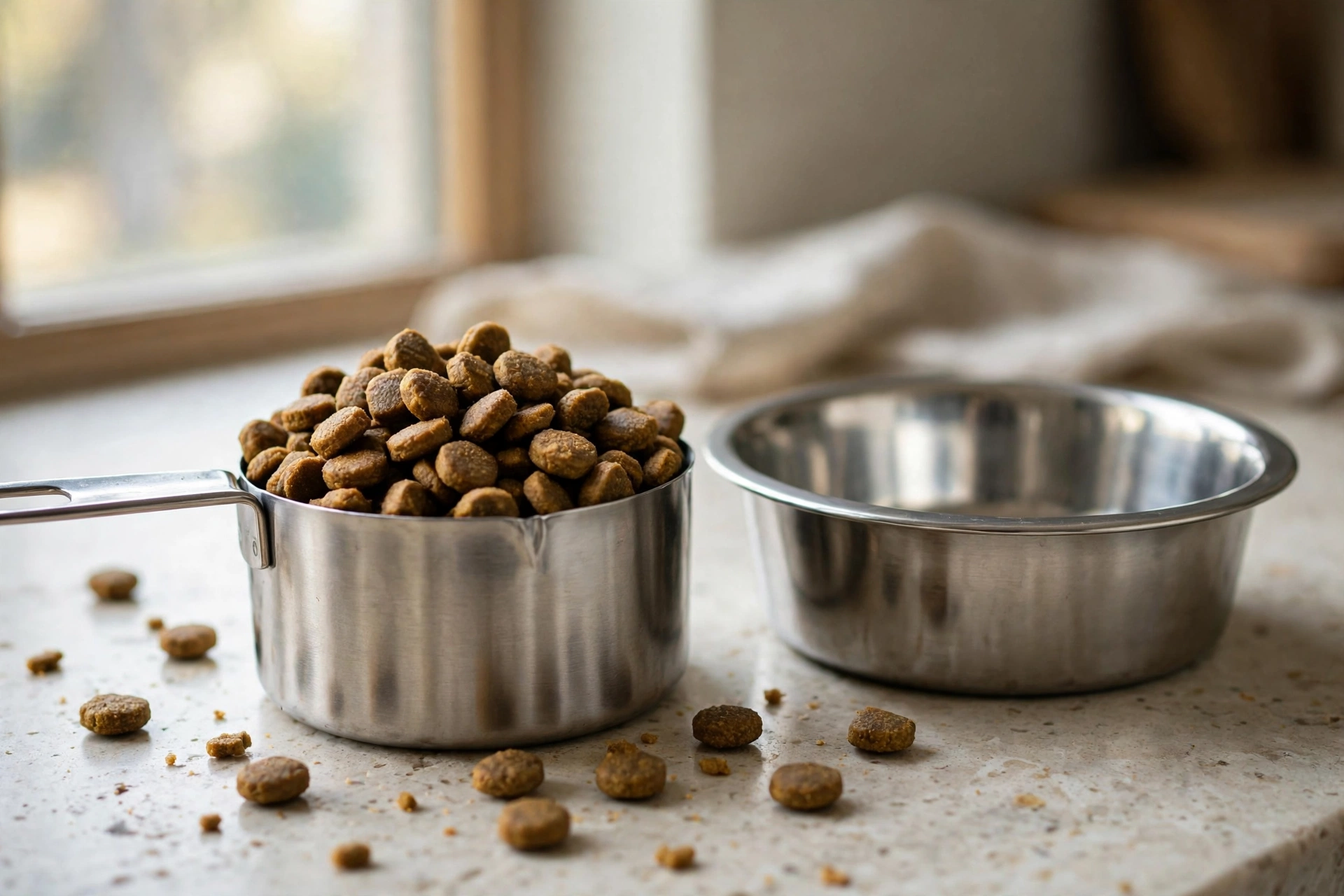
Step 3: Use the calorie line to compare. Every bag lists calories per cup or per kilogram. When you switch foods, match total daily calories rather than cups, because a cup of one food can hold 20 percent more calories than a cup of another. A kitchen scale beats a scoop: weigh the food for a week until you know what the right portion looks like.
Step 4: Transition over 7 to 10 days. Mix increasing amounts of the new food into the old, roughly 25 percent new every couple of days. A sudden switch often causes digestive upset, and a dog with an upset stomach is a dog whose owner abandons the diet.
Step 5: Weigh every 2 to 4 weeks. Safe loss is 1 to 2 percent of body weight per week; a 50-pound dog should drop roughly half a pound to a pound weekly. If the scale does not move after a month of honest measuring, cut portions by 10 percent or call your vet. Plateaus are normal and fixable.
Treats and Exercise Without the Guilt Spiral
Treats can be up to 10 percent of daily calories, and that budget disappears fast. A single large biscuit can carry 100 calories or more, which is a meaningful chunk of a dieting dog’s day. Swap calorie-dense treats for baby carrots, green beans, apple slices or ice cubes; most dogs accept the trade once the routine sets in. Break treats into pea-sized pieces for training so the reward stays frequent and the calories stay low.
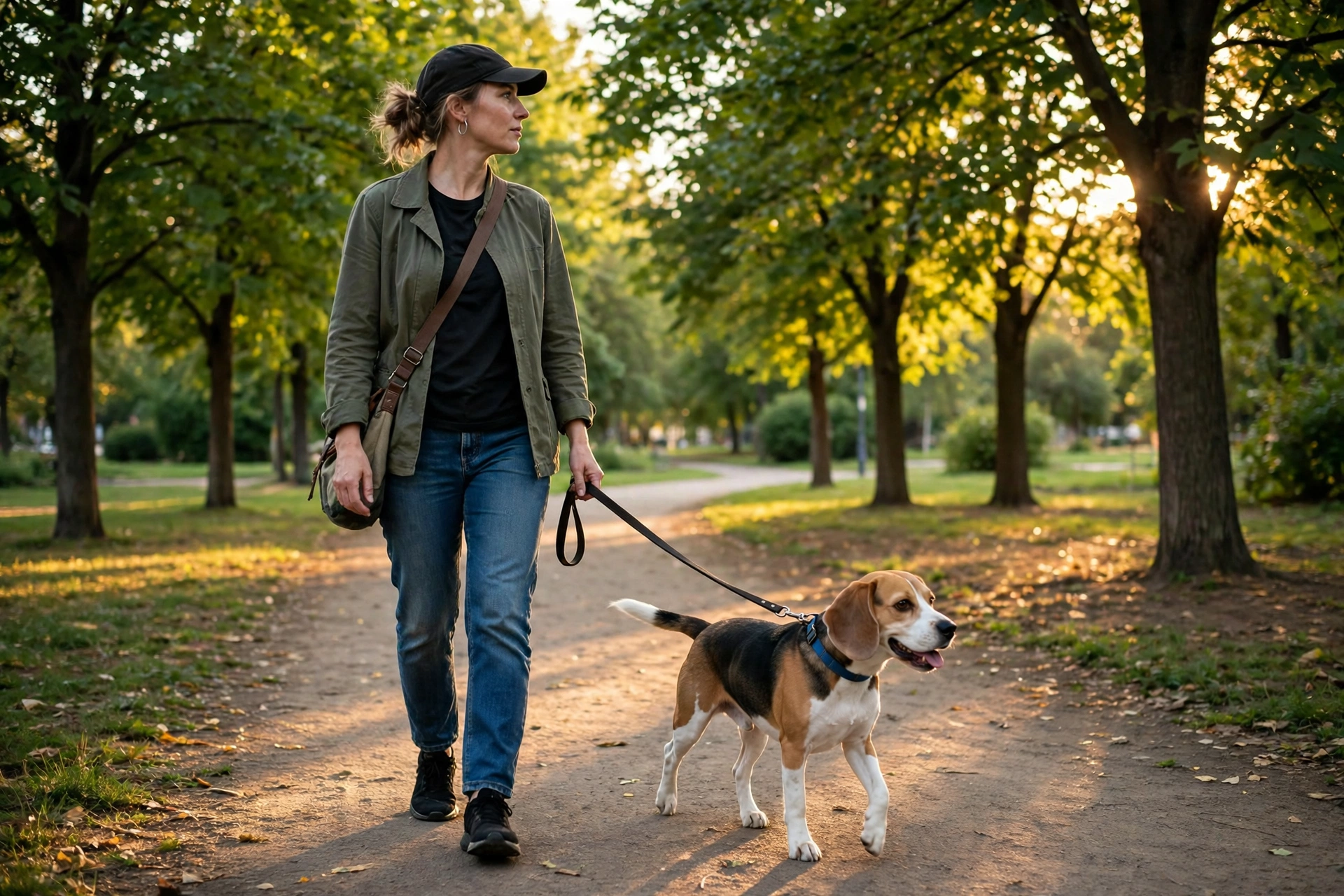
Exercise helps, but diet does the heavy lifting. Build walks up gradually, especially for heavy dogs whose joints are already loaded. Two 20-minute walks beat one exhausting weekend hike, and swimming is the kindest cardio for arthritic or very overweight dogs. Add food puzzles and snuffle mats too; a dog that works for its kibble eats slower and feels fuller.
5 Mistakes That Stall Weight Loss
Eyeballing portions. Studies of owner measuring habits keep finding the same thing: the “cup” most people pour is not a cup. Level scoops or a scale, every meal, no exceptions.
Free feeding. A bowl that is never empty makes calorie control impossible. Scheduled meals, measured amounts, bowl picked up after 20 minutes.
Forgetting the extras. Table scraps, the other family member’s treats, the dental chew, the Kong stuffing. They all count, and together they often equal a full extra meal.
Changing foods instead of changing portions. If the scale stalls, the answer is almost never a different brand. It is a smaller portion of the current food, fed consistently.
Skipping the vet check. Hypothyroidism and Cushing’s disease both cause weight gain and resist dieting. If a genuinely well-measured diet does nothing for two months, get bloodwork before blaming the food.
If your household also has a cat on a diet, our guide to the best cat food for weight loss covers the feline version of this plan. And if your dog’s problem runs the other way, see our picks for the best dog food for weight gain, plus our roundup of dog vitamins and supplements for the nutrition gaps dieting can leave.
Frequently Asked Questions
How fast should my dog lose weight?
Aim for 1 to 2 percent of body weight per week. A 50-pound dog should lose roughly half a pound to a pound each week. Faster loss can cost muscle instead of fat, so steady wins.
Can I just feed less of my dog’s regular food?
Cutting portions of regular food does cut calories, but it also cuts vitamins and minerals below what your dog needs. Weight formulas keep nutrients dense while calories drop, which is why vets prefer them for real diets.
Is grain-free dog food better for weight loss?
No. Grain-free recipes are not automatically lower in calories, and some run higher in fat. Weight loss comes from the calorie number on the label, not from the presence or absence of grains.
When does my dog need a prescription weight-loss food?
When there is a lot to lose, when over-the-counter portions have stalled for two months, or when health conditions like diabetes or joint disease complicate the diet. Your vet decides and monitors the plan.
Why does my dog act starving on a diet?
Some hunger is normal during a calorie cut. Higher-fiber food, split meals, slow-feeder bowls and puzzle toys all help. If begging is extreme or sudden, check with your vet to rule out medical causes and confirm portions.