Finding the best dog food for large breeds takes more thought than grabbing the biggest bag on the shelf. A Labrador, Golden Retriever, German Shepherd, or Great Dane does not just eat more than a small dog. Big dogs grow differently, age differently, and put far more stress on their joints with every step. Feed them the wrong recipe and you can end up with weight gain, joint trouble, or growth problems in puppies that follow them for life.
The good news is that several brands now make formulas designed specifically for dogs over 50 pounds. These recipes control calories, support joints, use larger kibble that big mouths can chew properly, and balance minerals so bones develop at a healthy pace. After comparing the most recommended large breed formulas on the market, we narrowed it down to eight picks that cover every budget and feeding style, from vet trusted classics to strong value buys.
What to Look for in Food for Large Breeds
Before you compare bags, it helps to know what actually matters for a big dog. The right recipe checks most of these boxes. For a deeper walkthrough of reading labels and spotting quality, see our guide on how to choose vet-recommended dog food.
Joint support
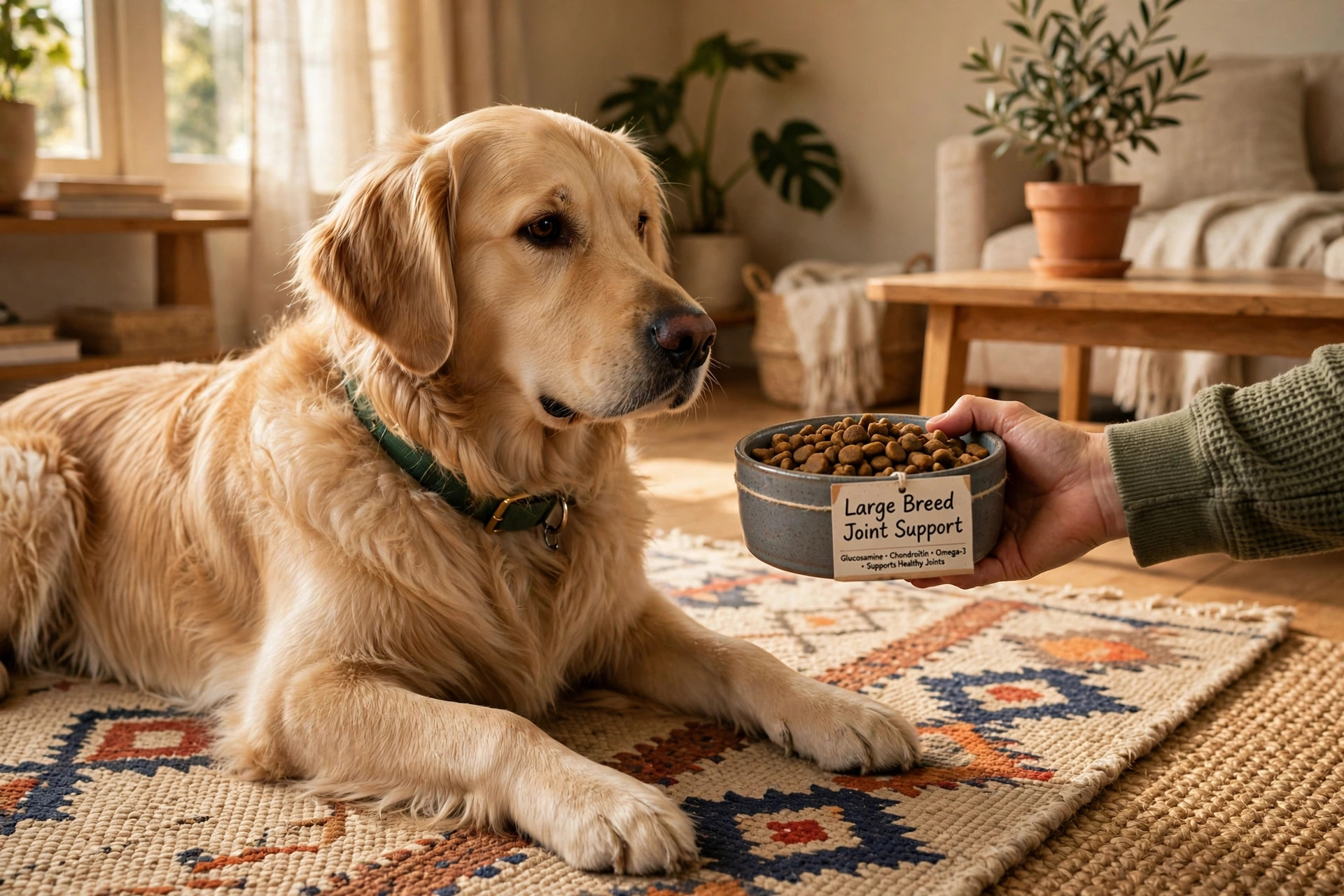
Large dogs carry a lot of weight on their hips and elbows, and breeds like Labs, German Shepherds, and Rottweilers are prone to hip and elbow dysplasia. The best dog food for large breeds usually includes glucosamine and chondroitin, two nutrients that support cartilage and joint function. Some formulas add omega-3 fatty acids from fish oil for the same reason. These ingredients will not fix a bad hip, but they give your dog nutritional support where it counts most.
Calorie control and healthy weight
Big dogs gain weight easily and hide it well under a thick coat. Extra pounds multiply the load on joints and raise the risk of arthritis, diabetes, and a shorter lifespan. Large breed formulas are typically a little less calorie dense than all breed recipes, which helps you feed a satisfying volume without overdoing calories. Keep an eye on body condition: you should be able to feel your dog’s ribs with light pressure and see a visible waist from above. If your big dog is underweight and struggling to gain, read our notes on dog food for weight gain before simply piling on more food.
Protein and fat levels
Adult large breed dogs generally do well on recipes with around 22 to 26 percent protein and moderate fat. Very high protein, very high calorie recipes are better suited to highly active or working dogs. A couch loving giant does not need a performance formula, and the extra calories will land on his frame. Match the recipe to your dog’s real activity level, not the one you wish he had.
Calcium and phosphorus balance
This one matters most for puppies. Too much calcium during growth can cause skeletal problems in large breed puppies, including uneven bone development. Good large breed puppy formulas control calcium and keep the calcium to phosphorus ratio in a safe range. If a bag does not show these values, that is a red flag.
The AAFCO statement
Every quality dog food carries an AAFCO nutritional adequacy statement, usually in small print near the guaranteed analysis. It should say the food is formulated to meet AAFCO nutrient profiles for a specific life stage, such as adult maintenance or growth including large breed puppies. Feeding trials are a bonus sign of quality. No statement means no verified nutritional standard, so skip it.
Kibble size
Small kibble encourages big dogs to gulp without chewing, which can lead to choking or bloat risk. Large breed recipes use bigger kibble pieces that slow down fast eaters and give those big jaws something to work on. If you have a confirmed speed eater, a slow feeder bowl helps even more.
Large breed puppy caution
Large breed puppies should never eat regular puppy food or adult food during their first year or more. They need a formula made for large breed growth, with controlled calories and minerals so their skeleton grows at a steady pace. Overfeeding a large breed puppy is one of the most common owner mistakes and a known risk factor for developmental bone disease. Feed measured meals, follow the bag’s large breed puppy chart, and check our Diamond Naturals puppy food feeding guide for a worked example of portioning a growing pup.
The 8 Best Dog Foods for Large Breeds
Here is how our eight picks compare at a glance, then a closer look at each one.
| Pick | Best for | Standout feature |
|---|---|---|
| Blue Buffalo Life Protection Large Breed Adult | Best overall | Glucosamine, chondroitin, and antioxidant LifeSource Bits |
| Royal Canin Large Breed Adult | Picky eaters | Highly palatable recipe with tailored kibble shape |
| Hill’s Science Diet Adult Large Breed | Vet trust | Precise nutrition backed by extensive feeding research |
| Purina Pro Plan Large Breed Adult | Active dogs | Higher protein and fat for dogs with real energy to burn |
| Nutro Wholesome Essentials Large Breed Adult | Natural ingredients | Farm raised chicken with no artificial colors, flavors, or preservatives |
| Diamond Naturals Large Breed Adult | Value | Strong nutrition, probiotics, and glucosamine at a lower price |
| Taste of the Wild Sierra Mountain | Taste appeal | Roasted lamb recipe with added probiotics for digestion |
| Iams ProActive Health Large Breed Adult | Budget | Affordable and easy to find in most stores |
1. Blue Buffalo Life Protection Formula Large Breed Adult: best overall
Blue Buffalo’s large breed recipe earns the top spot by covering the most bases in one bag. It includes glucosamine and chondroitin for joints, omega-3 and omega-6 fatty acids for skin and coat, and the brand’s LifeSource Bits, a blend of antioxidants, vitamins, and minerals. Real deboned chicken leads the ingredient list, and the larger kibble size suits big jaws. It sits at a mid range price that most owners can sustain long term, which matters because consistency beats a fancy bag you can only afford for a month.
2. Royal Canin Large Breed Adult Dry: best for picky eaters
If your big dog turns his nose up at dinner, Royal Canin is worth a try. The recipe is built for palatability, and the kibble is shaped to encourage chewing in large mouths. It includes glucosamine and chondroitin plus EPA and DHA for joint and coat support. It costs more than grocery store brands, but picky large dogs often eat it reliably, and a dog that actually eats his food gets the nutrition on the label.
3. Hill’s Science Diet Adult Large Breed: best vet trusted pick
Hill’s has one of the longest research histories in pet nutrition, and many vets recommend it by default. The large breed adult formula uses natural sources of glucosamine and chondroitin for joint support and a balanced mineral profile. Feeding trials and strict quality control back up the label claims. It is not the cheapest option and the ingredient list will not excite natural food fans, but for owners who want the most studied, predictable nutrition, this is a safe choice.
4. Purina Pro Plan Large Breed Adult: best for active dogs
For the Lab who swims every morning or the Shepherd who hikes every weekend, Purina Pro Plan Large Breed brings higher protein and fat to fuel real activity. Chicken is the first ingredient, and the formula includes glucosamine and EPA for joints plus live probiotics for digestion. This is a performance leaning recipe, so it fits active dogs better than couch companions. If your dog is moderately active at most, one of the maintenance style picks above will suit him better.
5. Nutro Wholesome Essentials Large Breed Adult: best natural ingredients
Nutro keeps the ingredient list clean and readable, with farm raised chicken first and no artificial colors, flavors, or preservatives. The large breed version adds glucosamine and chondroitin plus omega fatty acids. Owners who read every label tend to like this one. The price lands in the middle of the pack, making it one of the more accessible natural leaning options for big dogs.
6. Diamond Naturals Large Breed Adult: best value
Diamond Naturals is the pick for owners who want quality nutrition without the premium price tag. The large breed adult recipe includes glucosamine and chondroitin, added probiotics for digestion, and omega fatty acids for skin and coat, a feature set that usually costs more. If you are weighing price against quality, our cheap vs premium dog food breakdown walks through where spending more actually pays off and where it does not.
7. Taste of the Wild Sierra Mountain: best for taste appeal
Some large dogs simply prefer the taste of novel proteins, and the roasted lamb in Sierra Mountain wins over many reluctant eaters. It includes species specific probiotics for digestive support and omega fatty acids for coat health. One honest note: this is a grain free recipe, and grain free diets have been linked in FDA reports to a possible association with heart disease (DCM) in some dogs. Talk to your vet before going grain free long term, especially with breeds already prone to heart issues.
8. Iams ProActive Health Large Breed Adult: best budget
Iams is the most affordable pick on this list and the easiest to find, sold in just about every grocery store and big box retailer. The large breed formula includes glucosamine and chondroitin and is tailored to the needs of dogs over 50 pounds. It will not match the ingredient quality of the premium picks, but it is a complete and balanced large breed food at a price almost anyone can afford, and that consistency has real value.
Feeding Guide for Large Breed Dogs
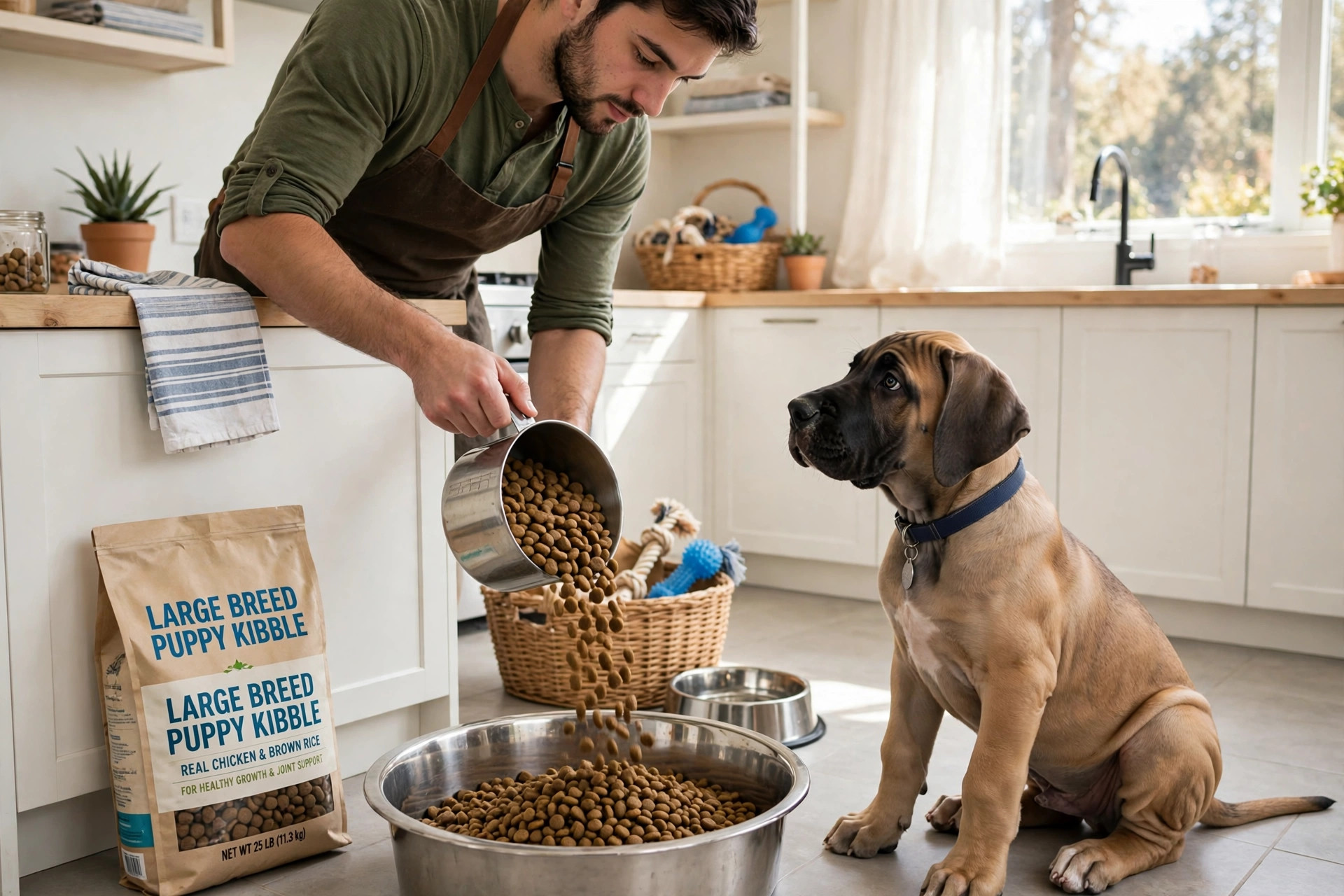
Even the best dog food for large breeds only works if portions are right. Start with the feeding chart on the bag for your dog’s weight, then adjust based on body condition and your vet’s advice. Most adult large dogs do well on two meals a day, which also lowers bloat risk compared to one huge meal. Giant breeds may do better on two or even three smaller meals.
Measure with an actual measuring cup, not a scoop or a guess. Studies have shown owners routinely overfeed by 20 percent or more when they eyeball portions, and on a 90 pound dog that adds up fast. Weigh your dog monthly at first, and adjust food up or down in small steps if he drifts away from ideal condition.
Transition to any new food over seven to ten days, mixing increasing amounts of the new food with the old. Large dogs can have sensitive stomachs during switches, and a slow transition avoids most problems. Keep fresh water available at all times, and store kibble in a sealed container in a cool, dry place to protect the fats and nutrients.
Frequently Asked Questions
What is the best dog food for large breeds?
For most adult large dogs, Blue Buffalo Life Protection Large Breed Adult is our top pick because it combines joint support, quality protein, and a fair price. The right choice still depends on your dog: picky eaters often do better on Royal Canin, highly active dogs on Purina Pro Plan, and tight budgets on Diamond Naturals or Iams. Any of the eight picks above is a solid large breed formula.
Do large breed dogs really need special food?
Yes. Large breed formulas differ from regular adult food in ways that matter: controlled calories to prevent excess weight, added glucosamine and chondroitin for joints, larger kibble, and carefully balanced calcium and phosphorus. For puppies the difference is even more important, since the wrong mineral balance during growth can cause lasting skeletal problems.
How much should I feed my large breed dog?
It depends on the food’s calorie content, your dog’s weight, age, and activity level. A typical 70 to 90 pound adult dog eats roughly 3 to 4 cups of dry food per day split into two meals, but this varies widely between recipes. Always start with the bag’s feeding chart for your dog’s weight, measure precisely, and adjust based on body condition and your vet’s guidance.
Is grain free food safe for large dogs?
Grain free diets have been associated in FDA reports with a possible link to dilated cardiomyopathy (DCM), a serious heart condition, in some dogs. The connection is not fully understood, and many dogs eat grain free food without issues, but large and giant breeds already carry higher DCM risk. Unless your vet recommends grain free for a specific reason like an allergy, a quality grain inclusive large breed formula is the safer default.
When should I switch from large breed puppy food to adult food?
Most large breeds transition to adult food between 12 and 15 months, while giant breeds like Great Danes may stay on large breed puppy food until 18 to 24 months. Switch too early and you lose the controlled growth benefits; switch too late and excess calories can add unhealthy weight. Ask your vet for timing based on your individual dog’s growth, and transition gradually over a week or more.
The Bottom Line
The best dog food for large breeds is one that respects what makes big dogs different: heavier joints, faster growth as puppies, and a real talent for gaining weight. All eight picks on this list are complete, balanced large breed formulas with joint support built in. Choose based on your dog’s appetite, activity level, and your budget, feed measured meals twice a day, and keep your vet in the loop. Do that consistently and your gentle giant gets the nutrition his size demands.